Why strength training is worth learning
Strength training is more than a way to change appearance. It can help people build muscular strength, improve confidence in daily movement, support bone and joint health, and make ordinary tasks feel easier. Women of every age can benefit from learning how to lift, push, pull, carry, squat, hinge, and stabilize with appropriate resistance.
Beginners often worry that lifting weights will make them “too bulky,” that they must train every day, or that they need advanced equipment immediately. Those ideas create unnecessary pressure. A beginner plan should be simple enough to repeat, challenging enough to create progress, and flexible enough to fit real life.
This article is general fitness education, not medical advice. If you are pregnant, recently postpartum, managing osteoporosis, recovering from an injury, or experiencing pain, work with a qualified healthcare professional or appropriately credentialed coach.
The movement patterns to learn
A balanced beginner program does not need dozens of exercises. It needs a few movement patterns performed consistently.
Squat
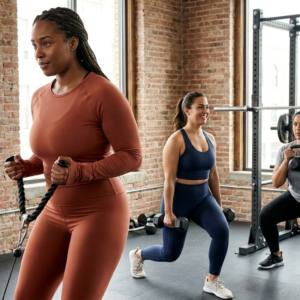
Squatting trains the hips and legs while asking the torso to stay controlled. Begin with a bodyweight squat to a comfortable depth. You can progress to a goblet squat, split squat, leg press, or barbell variation. Use a depth that you can control without pain or losing balance.
Hinge
A hinge moves the hips backward while the spine remains controlled. Romanian deadlifts, kettlebell deadlifts, and hip hinges are common examples. The goal is not to touch the floor at all costs. Learn to load the hips and keep the weight close to the body.
Push
Push movements include push-ups, dumbbell presses, machine presses, and overhead presses. Begin with an angle or load that allows steady repetitions. A wall push-up or elevated push-up can be a legitimate starting point.
Pull
Rows, pulldowns, assisted pull-ups, and cable exercises train the upper back and arms. Pull with control rather than jerking the weight. Keep the shoulders comfortable and stop a set when technique breaks down.
Carry and brace
Farmer carries, suitcase carries, dead bugs, planks, and controlled anti-rotation exercises train the trunk. Core training is not limited to endless crunches. Learning to brace while breathing can improve confidence during larger lifts.
Locomotion and conditioning
Walking, cycling, rowing, step-ups, and low-impact circuits can improve work capacity. Conditioning should support strength rather than leave you too exhausted to recover.
A simple three-day beginner plan
Train on nonconsecutive days, such as Monday, Wednesday, and Friday. Start with a warm-up of five to ten minutes of easy movement, joint-friendly mobility, and light practice sets.
Day one: goblet squat, dumbbell bench press or elevated push-up, one-arm row, Romanian deadlift, dead bug, and an easy walk.
Day two: split squat or step-up, overhead press, lat pulldown or band pulldown, hip thrust, suitcase carry, and low-impact intervals.
Day three: leg press or squat variation, incline push-up or chest press, seated row, kettlebell deadlift, side plank, and an easy conditioning finisher.
Perform two or three sets of each strength movement. Beginners can start with approximately six to twelve controlled repetitions, but the correct range depends on the exercise and your ability to maintain form. Leave a few repetitions in reserve rather than training every set to failure.
The plan is a framework, not a test. If a movement causes pain or you cannot control it, reduce the load, shorten the range, change the variation, or seek coaching.
How to choose the right starting weight
The correct starting weight allows you to complete the planned repetitions with stable technique and controlled breathing. The last few repetitions should feel challenging but not chaotic. If you must swing, hold your breath excessively, change your body position, or rush the movement, the load is too high for that set.
Start lighter than your ego wants. The first sessions are for learning. Add weight only after you can repeat the movement with consistent range and alignment. Different exercises will require different loads. A weight appropriate for a goblet squat may be too heavy for a shoulder raise.
Progress without obsessing over numbers
Progressive overload means gradually increasing the challenge. You can add repetitions, sets, load, range of motion, control, or a harder variation. You do not need to increase weight every session.
Use a simple log with the date, exercise, sets, repetitions, load, and a short note about effort. When you reach the top of your planned repetition range with good form, increase the load slightly at the next session. If sleep, stress, illness, or your menstrual cycle affects how you feel, adjust the session without treating that as failure.
Consistency beats dramatic workouts. A manageable plan completed for twelve weeks is more valuable than an exhausting plan abandoned after ten days.
Warm-up and technique
A warm-up should prepare you for the session, not drain you. Begin with general movement, then practice the patterns you will train. For a squat session, try bodyweight squats and light goblet squats. For pressing, use an unloaded range and a light set.
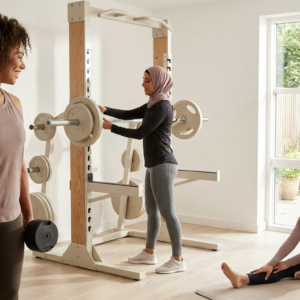
Technique is not a fixed pose. Bodies differ in height, limb length, mobility, and training history. A qualified coach can help you find a comfortable stance, grip, and range. Online videos can offer ideas but cannot assess your movement in real time.
Pain deserves attention. Muscle effort, mild fatigue, and a normal training challenge are different from sharp, escalating, or radiating pain. Stop when something feels wrong and seek appropriate evaluation.
Recovery and rest
Muscles adapt during recovery. Sleep, food, hydration, rest days, and stress management all affect training. Beginners often improve with three strength sessions per week and light movement on other days.
You do not need to “earn” rest. Rest is part of the program. If your performance declines across sessions, soreness does not resolve, or you feel unusually exhausted, reduce volume and review sleep, food, stress, and technique.
A short walk, gentle mobility session, or easy cycling can be useful on a rest day. It should leave you feeling better, not more depleted.
Nutrition for beginner strength training
A balanced eating pattern can support training. Include protein-rich foods, carbohydrates for activity, healthy fats, fruits, vegetables, and enough fluids. Protein sources may include dairy, eggs, fish, meat, soy, beans, lentils, and other foods that fit your preferences.
Avoid extreme promises about “fat-burning” foods or supplements. You do not need a perfect diet to become stronger. If you have a history of disordered eating, a medical condition, or a special dietary need, work with an appropriately qualified professional.
Training across different life stages
Training needs can change during pregnancy, postpartum recovery, perimenopause, menopause, illness, or periods of high stress. The correct plan is not the most intense plan. It is the plan that respects current capacity and medical guidance.
Menstrual-cycle tracking can help you understand personal patterns, but rigid claims that every woman must train according to a universal cycle formula are not reliable. Use your own symptoms, energy, sleep, and performance as information rather than a rulebook.
Gym confidence and practical habits
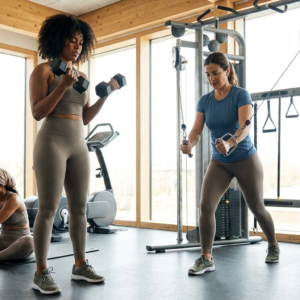
You do not need to wait until you feel confident to enter a gym. Prepare a short plan, save exercise demonstrations, choose a quieter time, and ask staff how equipment works. Headphones, a notebook, and a consistent warm-up can create structure.
Use equipment responsibly. Re-rack weights, wipe shared surfaces, keep walkways clear, and respect other members. If someone makes you uncomfortable, involve staff. Your safety and ability to train matter.
Common beginner mistakes
One mistake is changing the program every week. Another is using too much weight before learning the movement. Many beginners also compare their first month to someone else’s tenth year, follow influencer workouts without context, or treat soreness as proof of a good session.
Avoid copying a program designed for a different person without adapting it to your schedule, goals, and experience. More exercises are not automatically better. Build a foundation first.
Frequently asked questions
How often should women lift weights as beginners?
Two or three full-body sessions per week are a practical starting point for many beginners. Use nonconsecutive days when possible and adjust for recovery.
Will strength training make me bulky?
Muscle gain depends on training, nutrition, genetics, time, and other factors. Most beginners can focus on strength and health without worrying about sudden unwanted bulk.
Can I start strength training at home?
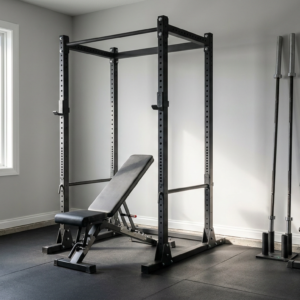
Yes. Bodyweight movements, bands, dumbbells, and a bench can support a complete beginner routine. Prioritize safe space, controlled technique, and gradual progression.
Should I do cardio before or after weights?
Either can work. If strength is the priority, perform challenging strength work when fresh, then add moderate cardio. If endurance is the main goal, organize the session around endurance.
What should I do if an exercise hurts?
Stop and assess it. Reduce load or range, try a different variation, and seek professional guidance if pain persists, is severe, or comes with other concerning symptoms.
A 12-week mindset
Think in phases. Weeks one through four are for learning. Weeks five through eight are for steady progression. Weeks nine through twelve are for reviewing what works and making small changes. Track actions you control: sessions completed, technique practice, sleep, meals, and recovery.
The goal is not to become a different person overnight. It is to become someone who can train consistently and adjust intelligently.